
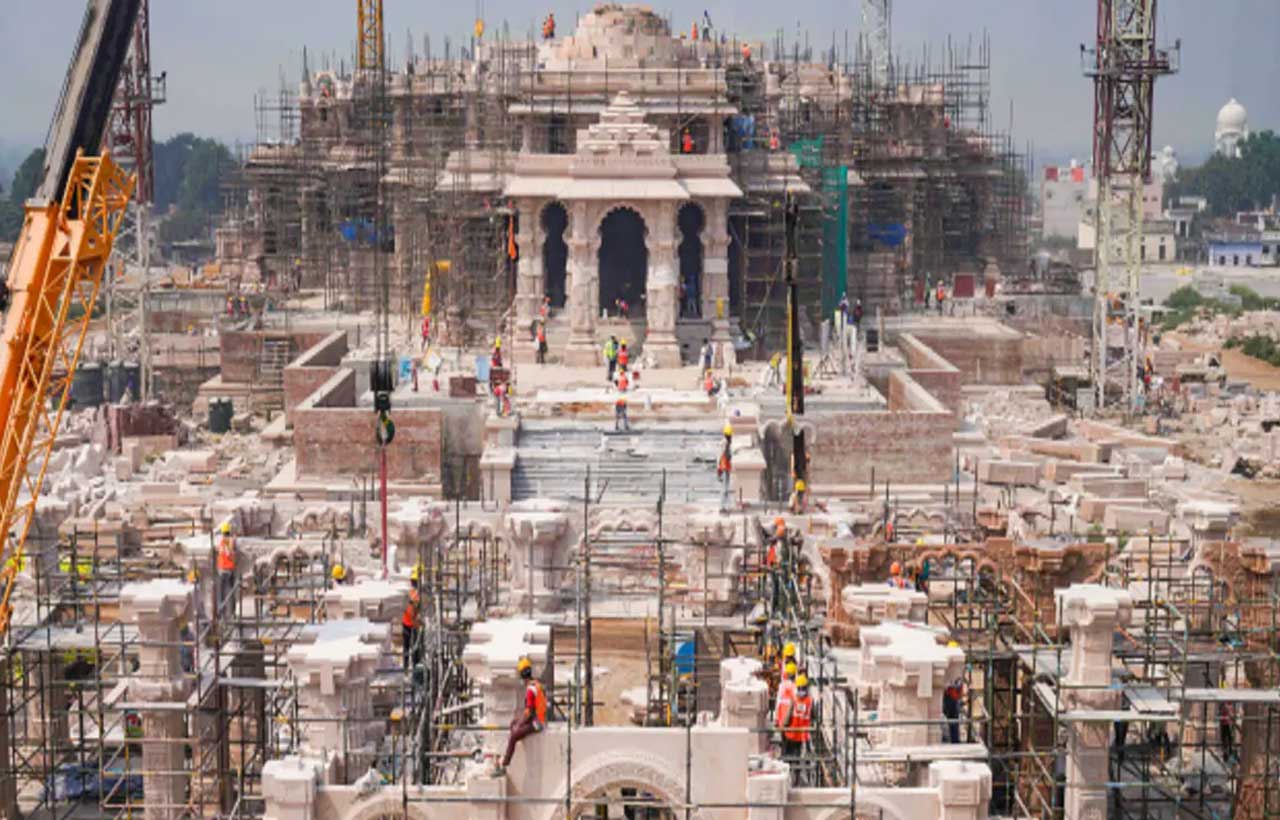
The Ayodhya Ram Mandir stands as a monument of spiritual significance, cultural identity, and historic triumph for millions of Hindus across the world. Nestled in the heart of Ayodhya, a city deeply rooted in Indian mythology and history, the temple is dedicated to Lord Ram, an avatar of Vishnu and the epitome of dharma (righteousness).
Historical Context
Ayodhya has been revered for centuries as the birthplace of Lord Ram, as described in the ancient Indian epic Ramayana. The site has long been a spiritual center, attracting pilgrims from across the globe. However, the journey to constructing the Ram Mandir was not without its challenges.
The site was embroiled in a decades-long legal and socio-political dispute concerning the presence of the Babri Masjid, which was built in 1528. In 1992, the demolition of the mosque led to widespread communal tensions, marking a pivotal moment in India’s modern history.
The issue was resolved through a landmark verdict by the Supreme Court of India on November 9, 2019. The court granted the disputed land for the construction of the Ram Mandir, while an alternate five-acre plot was allocated to the Muslim community to build a mosque.
Architectural Marvel
The Ram Mandir is an architectural masterpiece, reflecting ancient Indian temple design. Its intricate carvings and grandeur evoke a sense of divinity and pride in India’s rich heritage. Constructed using pink sandstone from Rajasthan, the temple’s design draws inspiration from the Nagara style of architecture, prominent in North India.
Spanning over 2.77 acres, the temple complex includes sanctified spaces for worship, meditation, and cultural activities. At its heart is the sanctum sanctorum, where the idol of Lord Ram in his child form (Ram Lalla) will be enshrined.
The temple is expected to accommodate thousands of devotees daily, with state-of-the-art facilities ensuring a comfortable and spiritually enriching experience.
Cultural and Religious Significance
The Ram Mandir is more than just a place of worship; it symbolizes the collective faith and perseverance of millions. Its construction marks a moment of cultural renaissance, reconnecting people with their roots and traditions.
Ayodhya, with the temple at its core, is set to become a global pilgrimage destination. This development not only honors India’s spiritual legacy but also boosts tourism and the local economy. Festivals like Ram Navami and Diwali are celebrated with unmatched fervor, drawing people from across the world to witness the city’s vibrant culture.
A Vision for the Future
The completion of the Ram Mandir is seen as a unifying moment, transcending divisions and fostering a sense of national pride. The temple’s inauguration, expected to take place in 2025, is poised to be a historic occasion.
In an era marked by rapid modernization, the Ayodhya Ram Mandir serves as a reminder of the timeless values enshrined in Lord Ram’s life—truth, justice, and compassion. It is not merely a temple but a beacon of hope and spirituality for generations to come.